
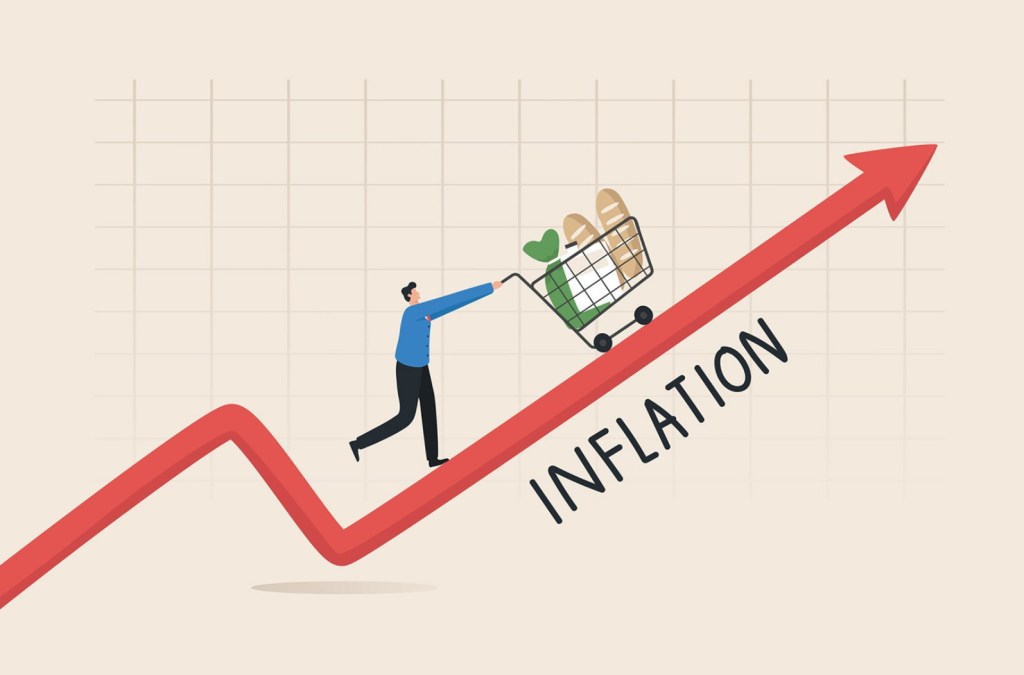
Before delving into the question at hand, it is essential to clarify the concept of inflation. Across various sources, inflation is simply defined as the “rate of increase in prices over a given period of time.” This phenomenon is a result of various factors that unpredictably interact, for instance, higher levels of employment and wages typically lead to increased consumer spending, which therefore increases demand. Businesses may seize the opportunity to raise prices for their goods and services to take advantage of this increase in demand. If this trend becomes prominent across different markets, inflation may follow.
Inflation, a commonly used term during the discussion of economics, holds a significant influence—both positive and negative—on economies. It impacts several areas such as purchasing power, interest rates, and overall economic growth, making it a fundamental concept to understandably and apply for a deeper understanding of more complex economic theories.
Milton Friedman, essentially the voice of monetarist economics, famously stated that “inflation is always and everywhere a monetary phenomenon”. To expand on the point, inflation occurs when the money supply grows more rapidly than the economy’s ability to produce goods and services. This view aligns perfectly with the ’Quantity Theory of Money’, which conveys that the general price level of goods and services is directly proportional to the volume of money in circulation, so if the supply of money in circulation increases, the average price of goods and services in all markets increase, which a simplified description of a reason why inflation can occur.
On the other hand, Keynesian economics offers a different perspective, arguing that inflation can also be caused by demand-pull factors. When demand in a market is greater than supply, businesses may take advantage of the opportunity and feel confident in raising prices, thinking that they can make a greater revenue. In this specific scenario, inflation is driven by the high levels of consumer demand rather than an increase in the supply of money.
Beyond the obvious, moderate inflation can, in fact, have positive effects on an economy. One of the benefits is a decrease in ‘real’ debt. As inflation rises, the real value of money—and consequently, outstanding debt goes down, making it easier for borrowers to pay back their loans. This could can stimulate both spending and investment, as consumers and businesses may have less debt to pay back. Furthermore, inflation can serve as an indicator of a strong market and economy. Rising prices may be a reflection of increased demand and hence strong consumer confidence too. Anticipating future price increases, businesses may focus on production and investment, hence increasing economic growth and job creation. Keynes argued that a certain level of inflation is essential to avoid the “liquidity trap,” a state where low or negative inflation slows down spending and investment, so halting economic momentum.
However, inflation may lead to various negatives as well. One of the most significant is the erosion of purchasing power. As prices rise, the real value of money declines, effectively reducing consumers’ ability to purchase goods and services. This decline in purchasing power can lead to a diminished standard of living, particularly for those on fixed incomes. High inflation can also engender economic uncertainty. Businesses may hesitate to invest in long-term projects if future costs are unpredictable, while consumers might curtail their spending as they gravitate towards essentials and cheaper alternatives. This cautious behaviour can stymie economic growth, creating a vicious cycle of reduced investment and consumption.
Ultimately, the impact of inflation on an economy depends a huge amount on its severity and predictability. Moderate and predictable inflation can be beneficial, leading to ‘real’ debt reduction and signalling economic growth. However, when inflation is out of control or unpredictable, it can have dangerous economic impacts: decreasing purchasing power, leaving the market with uncertainty, and creating a time of economic instability, particularly for those less well off economically.
Economists like Friedman have stressed the importance of controlling inflation through effective monetary policy, arguing that price stability is absolutely vital for long-term economic growth. Contrastingly, Keynesian economists preach for a more balanced approach, stressing the need to maintain demand whilst keeping inflation steady, particularly during periods of economic stress.
In conclusion, the impact of inflation on an economy is complicated and is affected by a variety of interlinking factors. While moderate inflation can catalyse economic growth and alleviate debt burdens, high or volatile inflation can lead to significant challenges for all those involved in the economic market. Therefore, effective monetary and fiscal policies are essential in managing inflation, ensuring that they support rather than undermine economic stability and growth.
 Studentnomics
Leave a comment