
All over the world, the Big Mac is the one product that people can understand and compare. It’s a symbol of capitalism, and its price reveals a lot about the economy of a country.
– The Economist
The Big Mac Index, introduced by The Economist in 1986, is a simple way of measuring the purchasing power of currencies around the world, based on the price of a Big Mac burger in that country’s McDonald’s. The idea is simple; if a Big Mac can be purchased for a different price in one country compared to another, the index can help to indicate if one currency is undervalued or overvalued relative to the other. In an ideal world, the price of identical goods should be the same across different countries. Let’s explore why this simple burger is used as a global economic benchmark!
But why use a Big Mac? The burger is used because of the fact that it is a globally recognised item, widely available, and made from similar ingredients in most countries. The Economist has even produced variations of the Big Mac index, such as the Tall Latte index, which replaced the Big Mac with a Starbucks coffee. Similarly, Bloomberg ran a Billy index, which converted the local prices of IKEA’s Billy bookshelf into US dollars and then compared the prices.
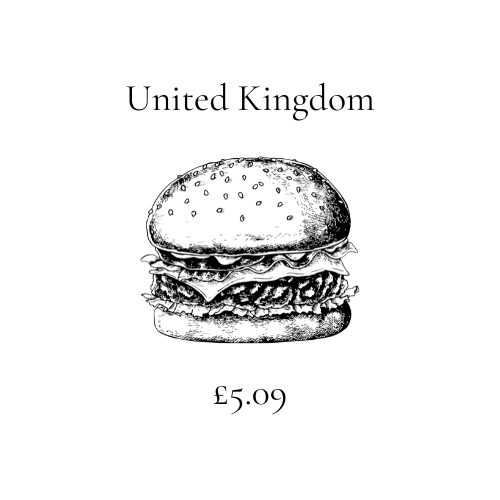
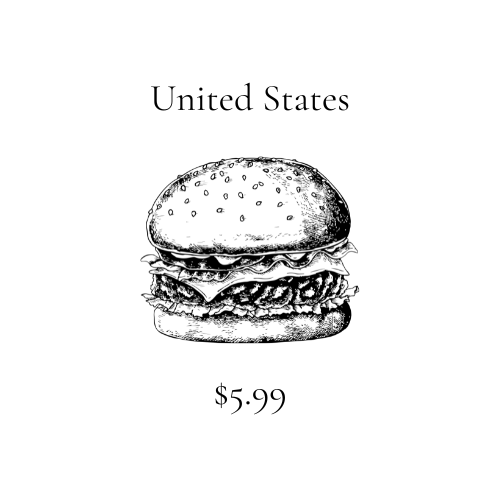
How do I calculate the purchasing power of a Big Mac? Firstly, find the price of a Big Mac in your country. Then calculate the exchange rate between your currency and the US dollar (for example), use a currency converter, to see the price of your Big Mac in dollars. Then find out the price of a Big Mac in the US. If your Big Mac is cheaper, your currency is undervalued. If it’s more expensive, your currency is overvalued. In some rare instances, you may find the prices are the same, then: congratulations! The currencies are considered to have similar purchasing power. In the UK’s and US’s case, UK is overvalued, as seen below.
Price breakdown…
$5.99 is roughly equivalent to £4.63 ( <£5.09 ) [overvalued]
What are the limitations of the Big Mac Index? While the Big Mac Index offers valuable insights into currency valuation and purchasing power, it’s important to recognise its disadvantages. Firstly, the total price of the Big Mac will be heavily dependent on the firms costs, such as production delivery, advertisement, raw goods and more. Hence it doesn’t stand globally acceptable. Additionally, McDonald’s operates in only 111 of 195 countries, which leaves out many countries across the world. Finally, exchange rates are influenced by many factors beyond purchasing power, making the index a useful but imperfect measure.
What is an alternative to the Big Mac Index? The Economist’s “Basket of Goods” is a broader approach, using a selection of goods and services, like food, housing, and transportation, to better reflect cost of living differences across countries. Instead of relying on a single item like a Big Mac, the Basket of Goods looks at a range of common items, such as food, clothing, transportation, and housing. The idea is to capture a more accurate representation of what people typically purchase in their daily lives.
In conclusion, the Big Mac Index offers a simple and accessible way to compare the purchasing power of different currencies based on the price of a common product. While it provides valuable insights into currency valuation and cost of living, it has limitations, such as its reliance on just one product and the influence of local factors. Despite these drawbacks, the Big Mac Index remains a popular tool to analyse and compare global economic trends and currency differences in an easy-to-understand way. Yum!
 Studentnomics
Leave a comment